📋 Previous Year Paper
NEET 2017
Full paper · Physics, Chemistry & Biology · 180 Questions · 3 Hours 20 Minutes
180Questions
720Max Marks
200Minutes
+4 / −1Marking
💡
You're browsing as a guest. Register for free to attempt a subset of these questions and track your performance. Unlock the full paper with a one-time subscription.
📊 Your Full Test Performance Summary
NEET 2017You are yet to attempt this test. Complete the test to see your performance summary here.
180
Questions Available
0
Attempted
0
No. of Attempts
0
Correct
00:00
Total Time
00:00
Avg / Question
⚛️ Physics — 45 Questions
1
Physics+4 / −1A physical quantity of the dimensions of length that can be formed out of c, G and \(\displaystyle \frac{e^2}{4\pi \, \epsilon_0}\) is
[c is velocity of light, G is the universal constant of gravitation and e is charge]
[c is velocity of light, G is the universal constant of gravitation and e is charge]
2
Physics+4 / −1Thermodynamic processes are indicated in the following diagram
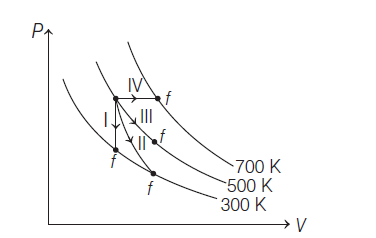
Match the following:
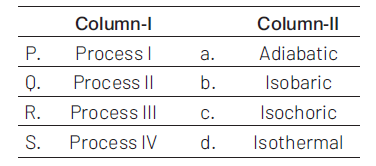
Match the following:
3
Physics+4 / −1A gas mixture consists of 2 moles of \(O_2\) and 4 moles of \(A_r\) at temperature T. Neglecting all vibrational modes, the total internal energy of the system is
4
Physics+4 / −1Suppose the charge of a proton and an electron differ slightly. One of them is \(−e\) and the other is \(\left(e + \Delta e\right)\). If the net of electrostatic force and gravitational force between two hydrogen atoms placed at a distance d (much greater than atomic size) apart is zero, then \(\Delta e\) is of the order [Given mass of hydrogen, \(m_h =1.67 × 10^{−27} kg\)]
5
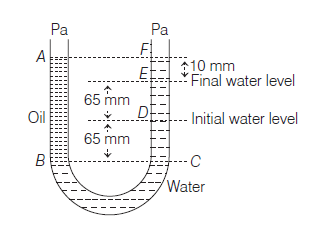
Physics+4 / −1A U tube with both ends open to the atmosphere, is partially filled with water. Oil, which is immiscible with water, is poured into one side until it stands at a distance of 10mm above the water level on the other side. Mean while the water rises by 65 mm from its original level (see diagram). The density ofthe oil is
6
Physics+4 / −1A spring of force constant k is cut into lengths of ratio \(1 : 2 : 3\). They are connected in series and the new force constant is \(k'\).Then they are connected in parallel and force constant is \(k''\).Then \(k' : k''\) is
7
Physics+4 / −1The two nearest harmonics of a tube closed at one end and open at other end are \(220\, Hz\) and \(260\, Hz\). What is the fundamental frequency of the system?
8
Physics+4 / −1A beam of light from a source L is incident normally on a plane mirror fixed at a certain distance x from the source. The beam is reflected back as a spot on a scale placed just above the source L. When the mirror is rotated through a small angle "q", the spot of the light is found to move through a distance y on the scale. The angle \(\theta\) is given by
9
Physics+4 / −1Consider a drop of rain water having mass 1 g falling from a height of 1km. It hits the ground with a speed of 50ms−1. Take 'g' constant with a value 10ms−2.The work done by the (i) gravitational force and the (ii) resistive force of air is
10
Physics+4 / −1A thin prism having refracting angle \(10^\circ\) is made of glass of refractive index 1.42. This prism is combined with another thin prismof glass of refractive index 1.7. This combination produces dispersion without deviation. The refracting angle of second prism should be
11
Physics+4 / −1The acceleration due to gravity at a height 1 Km above the earth is the same as at a depth "d" below the surface of earth. Then
12
Physics+4 / −1Two astronauts are floating in gravitational free space after having lost contact with their spaceship. The two will
13
Physics+4 / −1Young’s double slit experiment is first performed in air and then in a medium other than air. It is found that 8th bright fringe in the medium lies where 5th dark fringe lies in air. The refractive index of the medium is nearly
14
Physics+4 / −1The ratio of resolving powers of an optical microscope for two wavelengths \(\lambda_1 = 4000\,\mathring{A}\) and \(\lambda_2 = 6000\, \mathring{A}\) is
15
Physics+4 / −1Two polaroids \(\text{P}_1\) and \( \text{P}_ 2\) are placed with their axis perpendicular to each other. Unpolarised light \(\text{I}_0\) is incident on \(\text{P}_1\) . A third polaroid \(\text{P}_3\) is kept in between \(\text{P}_1\) and \(\text{P}_2\) such that its axis makes an angle 45° with that of \(\text{P}_1\). The intensity of transmitted light through \(\text{P}_2\) is
16
Physics+4 / −1A rope is wound around a hollow cylinder of mass 3 kg and radius 40 cm. What is the angular acceleration of the cylinder if the rope is pulled with a force of 30 N?
17
Physics+4 / −1Two discs of same moment of inertia rotating about their regular axis passing through centre and perpendicular to the plane of disc with angular velocities ω1 and ω2.They are brought into contact face to face coinciding the axis of rotation. The expression for loss of energy during this process is
18
Physics+4 / −1A Carnot engine having an efficiency of 110 as heat engine, is used as a refrigerator. If the workdone on the system is 10 J, the amount of energy absorbed from the reservoir at lower temperature is
19
Physics+4 / −1Which of the following statements are correct?
(1) Centre of mass of a body always coincides with the centre of gravity of the body.
(2) Centre of mass of a body is the point at which the total gravitational torque on the body is zero.
(3) A couple on a body produces both transnational and rotational motion in a body.
(4) Mechanical advantage greater than one means that small effort can be used to lift a large load.
(1) Centre of mass of a body always coincides with the centre of gravity of the body.
(2) Centre of mass of a body is the point at which the total gravitational torque on the body is zero.
(3) A couple on a body produces both transnational and rotational motion in a body.
(4) Mechanical advantage greater than one means that small effort can be used to lift a large load.
20
Physics+4 / −1Preeti reached the metro station and found that the escalator was not working. She walked up the stationary escalator in time \(t_1\). On other days, if she remains stationary on the moving escalator, then the escalator takes her up in time \(t_2\). The time taken by her to walk up on the moving escalator will be
21
Physics+4 / −1The de-Broglie wavelength of a neutron in thermal equilibrium with heavy water at a temperature T (kelvin) and mass m, is
22
Physics+4 / −1The photoelectric threshold wavelength of silver is \(3250 \times 10^{−10}\,m\). The velocity of the electron ejected from a silver surface by ultraviolet light of wavelength \(2536 \times 10^{−10}\,m\) is
[Given: \(h \,=\, 4.14 \times 10^{−15}\, \text{eVs}\) and \(c \,=\, 3 \times 10^8\,ms^{−1}\)]
[Given: \(h \,=\, 4.14 \times 10^{−15}\, \text{eVs}\) and \(c \,=\, 3 \times 10^8\,ms^{−1}\)]
23
Physics+4 / −1Two rods \(A\) and \(B\) of different materials are welded together as shown infigure. Their thermal conductivities are \(K_1\) and \(K_2\) The thermal conductivity of the composite rod will be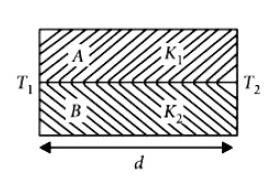
24
Physics+4 / −1A spherical black body with a radius of \(12\, \text{cm}\) radiates \(450\, \text{watt}\) power at \(500\, \text{K}\). If the radius were halved and the temperature doubled, the power radiated in watt would be
25
Physics+4 / −1The bulk modulus of a spherical object is \('B'\). If it is subjected to uniform pressure \('p'\) the fractional decrease in radius is
26
Physics+4 / −1In a common emitter transistor amplifier the audio signal voltage across the collector is 3 V. The resistance of collector is 3 KΩ. If current gain is 100 and the base resistance is 2 KΩ, the voltage and power gain of the amplifier is
27
Physics+4 / −1The given electrical network is equivalent to

28
Physics+4 / −1Which one of the following represents forward bias diode?
1

2

3

4

29
Physics+4 / −1The x and y coordinates of the particle at any time are x = 5t − 2\(t^2 \) and y = 10t respectively, where x and y are in meters and t in seconds. The acceleration of the particle at t = 2 s
30
Physics+4 / −1A long solenoid of diameter 0.1 m has 2 × 10⁴ turns per metre. At the centre of the solenoid, a coil of 100 turns and radius 0.01 m is placed with its axis coinciding with the solenoid axis. The current in the solenoid reduces at a constant rate to 0 A from 4 A in 0.05 s. If the resistance of the coil is 10π2Ω, the total charge flowing through the coil during this time is
31
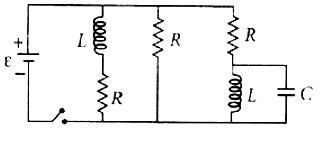
Physics+4 / −1Figure shows a circuit that contains three identical resistors with resistance R = 9.0Ω each, two identical inductors with inductance L =2.0 mH each, and an ideal battery with emf ε = 18V . The current i through the battery just after the switch closed is
32
Physics+4 / −1A particle executes linear simple harmonic motion with an amplitude of \(3\, \text{cm}\). When the particle is at \(2\, \text{cm}\) from the mean position, the magnitude of its velocity is equal to that of its acceleration. Then its time period in seconds is
33
Physics+4 / −1The ratio of wavelengths of the last line of Balmer series and the last line of Lyman series is
34
Physics+4 / −1Radioactive material A has decay constant \(8 \lambda\) and material B has decay constant \(\lambda\). Initially, they have same number of nuclei. After what time, the ratio of number of nuclei of material B to that A will be \(\frac{1}{e}\) ?
35
Physics+4 / −1Two cars moving in opposite directions approach each other with speed of \(22\,ms^{−1}\) and \(16.5\,ms^{−1}\) respectively. The driver of the first car blows a horn having a frequency \(400\, Hz\). The frequency heard by the driver of the second car is [velocity of sound is \(340\,ms^{−1}\)]
36
Physics+4 / −1A capacitor is charged by a battery. The battery is removed and another identical uncharged capacitor is connected in parallel. The total electrostatic energy of resulting system
37
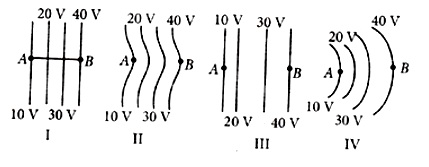
Physics+4 / −1The diagrams below show regions of equipotential. A positive charge is moved from A to B in each diagram.
38
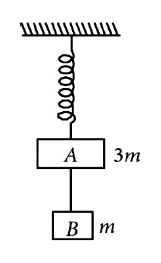
Physics+4 / −1Two blocks A and B of masses 3m and m respectively are connected by a mass-less and in extensible string. The whole system is suspended by a mass-less spring as shown in figure. The magnitudes of acceleration of A and B immediately after the string is cut are, respectively
39
Physics+4 / −1One end of string of length \(l\) is connected to a particle of mass \('m'\) and the other end is connected to a small peg on a smooth horizontal table.If the particle moves in circle with speed 'V' , the net force on the particle (directed towards center) will be (T represents the tension in the string)
40
Physics+4 / −1If \(θ_1\) and \(θ_2\) be the apparent angles of dip observed in two vertical planes at right angles to each other, then the true angle of dip \(\theta\) is given by
41
Physics+4 / −1A 250 turn rectangular coil of length 2.1 cm and width 1.25 cm carries a current of 85 µA and subjected to a magnetic field of strength 0.85 T. Work done for rotating the coil by 180° against the torque is
42
Physics+4 / −1The resistance of a wire is 'R' ohm. If it is melted and stretched to 'n'times its original length, its new resistance will be
43
Physics+4 / −1A potentiometer is an accurate and versatile device to make electrical
measurements of EMF because the method involves
44
Physics+4 / −1In an electromagnetic wave in free space the root mean square value of the electric field is \(E_{rms}\,=\, 6V m^{−1}\).The peak value of the magnetic field is
45
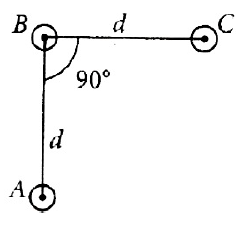
Physics+4 / −1An arrangement of three parallel straight wires placed perpendicular to plane of paper carrying same current I along the same direction as shown in figure. Magnitude of force per unit length on the middle wire ‘B’ is given by
🧪 Chemistry — 45 Questions
46
Chemistry+4 / −1The heating of phenyl-methyl ethers with HI produces
47
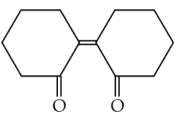
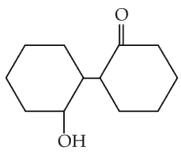
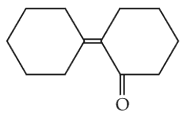
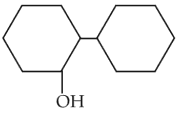
Chemistry+4 / −1Of the following, which is the product formed when cyclohexanone undergoes aldol condensation followed by heating ?
1
2
3
4
48
Chemistry+4 / −1Name the gas that can readily decolourizes acidified KMnO4 solution.
49
Chemistry+4 / −1Correct increasing order for the wavelengths of absorption in the visible region for the complexes of Co3+ is
50
Chemistry+4 / −1Mechanism of a hypothetical reaction X2 + Y2 \(\rightarrow\) 2XY is given below:
(i) X2 \(\rightarrow\) X + X (fast)
(ii) X + Y2 \(\rightleftharpoons\) XY + Y (slow)
(iii) X + Y \(\rightarrow\) XY (fast)
The overall order of the reaction will be
(i) X2 \(\rightarrow\) X + X (fast)
(ii) X + Y2 \(\rightleftharpoons\) XY + Y (slow)
(iii) X + Y \(\rightarrow\) XY (fast)
The overall order of the reaction will be
51
Chemistry+4 / −1Extraction of gold and silver involves leaching with CN- ion. Silver is later recovered by
52
Chemistry+4 / −1The reason for greater range of oxidation states in actinoids is attributed to
53
Chemistry+4 / −1The equilibrium constants of the following are:
N2 + 3H2 \(\rightleftharpoons\) 2NH3 ------ K1
N2 + O2 \(\rightleftharpoons\) 2NO ------ K2
H2 + \(\frac{\text{1}}{\text{2}}\)O2 \(\rightarrow \) H2O ------ K3
The equilibrium constant (K) of the reaction:
2NH3 + \(\frac{\text{5}}{\text{2}}\)O2 \(\rightleftharpoons\) 2NO + 3H2O, will be
N2 + 3H2 \(\rightleftharpoons\) 2NH3 ------ K1
N2 + O2 \(\rightleftharpoons\) 2NO ------ K2
H2 + \(\frac{\text{1}}{\text{2}}\)O2 \(\rightarrow \) H2O ------ K3
The equilibrium constant (K) of the reaction:
2NH3 + \(\frac{\text{5}}{\text{2}}\)O2 \(\rightleftharpoons\) 2NO + 3H2O, will be
54
Chemistry+4 / −1The most suitable method of separation of 1 : 1 mixture of ortho and para-nitrophenols is
55
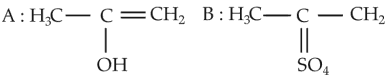
Chemistry+4 / −1Predict the correct intermediate and product in the following reaction

1

2

3
4

56
Chemistry+4 / −1Which of the following reactions is appropriate for converting acetamide to methanamine ?
57
Chemistry+4 / −1The IUPAC name of the compound is
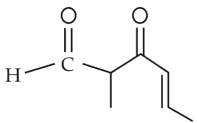
58
Chemistry+4 / −1Which of the following is a sink for CO?
59
Chemistry+4 / −1Which of the following pair of compounds is isoelectronic and isostructural ?
60
Chemistry+4 / −1Consider the reaction
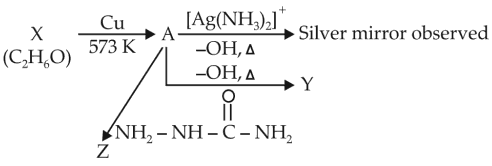
Identify A, X, Y, and Z
Identify A, X, Y, and Z
61
Chemistry+4 / −1Which one is the most acidic compound ?
1
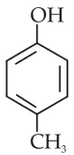
2
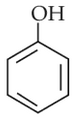
3
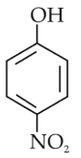
4
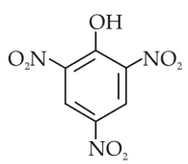
62
Chemistry+4 / −1Which one is the correct order of acidity ?
63
Chemistry+4 / −1Concentration of the Ag+ ions in a saturated solution of Ag2C2O4 is 2.2 × 10⁻⁴mol L–1. Solubility product of Ag2C2O4 is
64
Chemistry+4 / −1With respect to the conformers of ethane, which of the following statements is true ?
65
Chemistry+4 / −1The correct statement regarding electrophile is
66
Chemistry+4 / −1Which one is the wrong statement ?
67
Chemistry+4 / −1Match the interhalogen compounds of column I with the geometry in column II and assign the correct code.
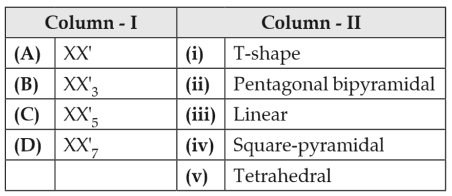
68
Chemistry+4 / −1The species, having bond angles of 120° is
69
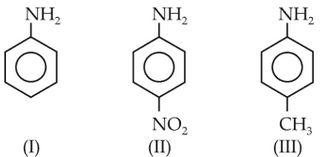
Chemistry+4 / −1The correct increasing order of basic strength for the following compounds is
70
Chemistry+4 / −1A gas is allowed to expand in a well insulated container against a constant external pressure of 2.5 atm from an initial volume of 2.50 L to a final volume of 4.50 L. The change in internal energy \(\Delta \text{U}\) of the gas in joules will be
71
Chemistry+4 / −1A 20 litre container at of 400 K contains CO2(g) at pressure 0.4 atm and an excess SrO (neglect the volume of solid SrO). The volume of the containers is now decreased by moving the movable piston fitted in the container. The maximum volume of the container, when pressure of CO2 attains its maximum value, will be
[Given : SrCO3(s) \(\rightleftharpoons\) SrO(s) + CO2 (g).
K = 1.6 atm]
[Given : SrCO3(s) \(\rightleftharpoons\) SrO(s) + CO2 (g).
K = 1.6 atm]
72
Chemistry+4 / −1Which of the following statements is not correct ?
73
Chemistry+4 / −1In which pair of ions both the species contain S – S bond ?
74
Chemistry+4 / −1Which one of the following pairs of species have the same bond order ?
75
Chemistry+4 / −1Mixture of chloroxylenol and terpineol acts as
76
Chemistry+4 / −1It is because of inability of ns2 electrons of the valence shell to participate in bonding that
77
Chemistry+4 / −1For a given reaction, \(\Delta \text{H}\) = 35.5 kJ mol–1 and \(\Delta \text{S}\) = 83.6 JK–1 mol–1. The reaction is spontaneous at :
[Assume that \(\Delta \text{H}\) and \(\Delta \text{S}\) do not vary with temperature]
[Assume that \(\Delta \text{H}\) and \(\Delta \text{S}\) do not vary with temperature]
78
Chemistry+4 / −1If molality of the dilute solution is doubled, the value of molal depression constant (Kf ) will be
79
Chemistry+4 / −1Which of the following is dependent on temperature ?
80
Chemistry+4 / −1Pick out the correct statement with respect to [Mn(CN)6]3–
81
Chemistry+4 / −1Which is the incorrect statement ?
82
Chemistry+4 / −1HgCl2 and I 2 both when dissolved in water containing I- ions, the pair ofspecies formed is
83
Chemistry+4 / −1The correct order of the stoichiometries of AgCl formed when AgNO3 in excess istreated with the complexes:
CoCl3.6NH3, CoCl3.5NH3, CoCl3 .4NH3 respectively is
CoCl3.6NH3, CoCl3.5NH3, CoCl3 .4NH3 respectively is
84
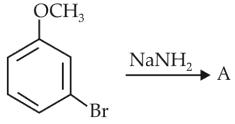
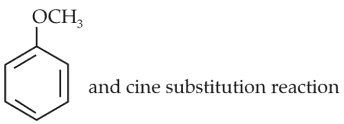
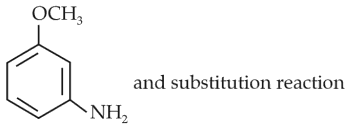
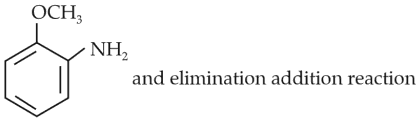
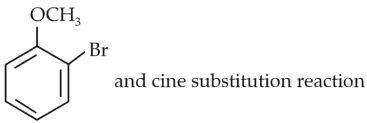
Chemistry+4 / −1Identify A and predict the type of reaction
1
2
3
4
85
Chemistry+4 / −1An example of a sigma bonded organometallic compound is
86
Chemistry+4 / −1The element Z = 114 has been discovered recently. It will belong to which of the following family group and electronic configuration ?
87
Chemistry+4 / −1A first order reaction has a specific reaction rate of 10-2 s-1. How much time will it take for 20 g of the reactant to reduce to 5 g ?
88
Chemistry+4 / −1Ionic mobility of which of the following alkali metal ions is lowest when aqueous solution of their salts are put under an electric field ?
89
Chemistry+4 / −1In the electrochemical cell
Zn|ZnSO4 (0.01M)| |CuSO4(1.0 M)|Cu, the emf of this Daniel cell is E1. When the concentration of ZnSO4 is changed to 1.0 M and that of CuSO4 changed to 0.01 M, the emf changes to E2. From the following, which one is relationship between E1 and E2
(Given, \(\frac{\text{RT}}{\text{F}}\) = 0.059)
Zn|ZnSO4 (0.01M)| |CuSO4(1.0 M)|Cu, the emf of this Daniel cell is E1. When the concentration of ZnSO4 is changed to 1.0 M and that of CuSO4 changed to 0.01 M, the emf changes to E2. From the following, which one is relationship between E1 and E2
(Given, \(\frac{\text{RT}}{\text{F}}\) = 0.059)
90
Chemistry+4 / −1Which one of the following statements is not correct ?
🧬 Biology — 90 Questions
91
Biology+4 / −1The final proof for DNA as the genetic material came from the experiments of
92
Biology+4 / −1The pivot joint between atlas and axis is a type of
93
Biology+4 / −1A temporary endocrine gland in the human body is
94
Biology+4 / −1A decrease in blood pressure/volume will not cause the release of
95
Biology+4 / −1The morphological nature of the edible part of coconut is
96
Biology+4 / −1Which of the following is correctly matched for the product produced by them ?
97
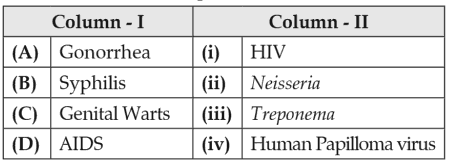
Biology+4 / −1Match the following sexually transmitted diseases (Column - I) with their causative agent (Column - II) and select the correct option.
98
Biology+4 / −1Among the following characters, which one was not considered by Mendel in his experiments on pea ?
99
Biology+4 / −1The process of separation and purification of expressed protein before marketing is called
100
Biology+4 / −1Hypersecretion of Growth Hormone in adults does not cause further increase in height, because
101
Biology+4 / −1Frog's heart when taken out of the body continues to beat for sometime.
Select the best option from the following statements :
(i) Frog is a poikilotherm
(ii) Frog does not have any coronary circulation
(iii) Heart is "myogenic" in nature
(iv) Heart is autoexcitable
Select the best option from the following statements :
(i) Frog is a poikilotherm
(ii) Frog does not have any coronary circulation
(iii) Heart is "myogenic" in nature
(iv) Heart is autoexcitable
102
Biology+4 / −1Transplantation of tissues/organs fails often due to non-acceptance by the patient's body. Which type of immune-response is responsible for such rejections ?
103
Biology+4 / −1Which statement is wrong for Kreb's cycle ?
104
Biology+4 / −1Artificial selection to obtain cows yielding higher milk output represents
105
Biology+4 / −1Spliceosomes are not found in cells of
106
Biology+4 / −1The association of histone H1 with a nucleosome indicates
107
Biology+4 / −1Which of the following is made up of dead cells ?
108
Biology+4 / −1Select the correct route for the passage of sperms in male frogs
109
Biology+4 / −1Adult human RBC's are enucleate. Which of the following statement(s) is/are most appropriate explanation for this feature ?
(i) They do not need to reproduce
(ii) They are somatic cells
(iii) They do not metabolise
(iv) All their internal space is available for oxygen
(i) They do not need to reproduce
(ii) They are somatic cells
(iii) They do not metabolise
(iv) All their internal space is available for oxygen
110
Biology+4 / −1Homozygous pure lines in cattle can be obtained by
111
Biology+4 / −1Viroids differ from viruses in having
112
Biology+4 / −1An example of colonial alga is
113
Biology+4 / −1In case of poriferans, the spongocoel is lined with flagellated cells called
114
Biology+4 / −1Identify the wrong statement in context of heartwood
115
Biology+4 / −1During DNA replication, Okazaki fragments are used to elongate
116
Biology+4 / −1Mycorrhizae are the example of
117
Biology+4 / −1 Which of the following RNA's is the most abundant in animal cell ?
118
Biology+4 / −1Which among the following are the smallest living cells, known without a definite cell wall, pathogenic to plants as well as animals and can survive without oxygen ?
119
Biology+4 / −1Which of the following components provides sticky character to the bacterial cell ?
120
Biology+4 / −1 With reference to factors affecting the rate of photosynthesis, which of the following statements is not correct ?
121
Biology+4 / −1Which of the following options best represents the enzyme composition of pancreatic juice ?
122
Biology+4 / −1Which one of the following statements is correct, with reference to enzymes ?
123
Biology+4 / −1If there are 999 bases in an RNA that codes for a protein with 333 amino acids, and the base at position 901 is deleted such that the length of the RNA becomes 998 bases, how many codons will be altered ?
124
Biology+4 / −1Asymptote in a logistic growth curve is obtained when
125
Biology+4 / −1Select the mismatch from the following
126
Biology+4 / −1Anaphase promoting complex (APC) is a protein degradation machinery necessary for proper mitosis of animal cells. If APC is defective in a human cell, which of the following is expected to occur ?
127
Biology+4 / −1Which ecosystem has the maximum biomass ?
128
Biology+4 / −1Zygotic meiosis is characteristic of
129
Biology+4 / −1Thalassemia and sickle cell anaemia are caused due to a problem in globin molecule synthesis. Select the correct statement.
130
Biology+4 / −1An important characteristic that Hemichordates share with Chordates is
131
Biology+4 / −1Double fertilization is exhibited by
132
Biology+4 / −1Which of the following cell organelles is responsible for extracting energy from carbohydrates to form ATP ?
133
Biology+4 / −1Lungs are made up of air-filled sacs, the alveoli. They do not collapse even after forceful expiration, because of
134
Biology+4 / −1Which of the following are not polymeric ?
135
Biology+4 / −1Flowers which have single ovule in the ovary and are packed into inflorescence are usually pollinated by
136
Biology+4 / −1Life cycle of Ectocarpus and Fucus respectively are
137
Biology+4 / −1Presence of plants arranged into well defined vertical layers depending on their height can be seen best in
138
Biology+4 / −1Phosphoenol pyruvate (PEP) is the primary CO2 acceptor in
139
Biology+4 / −1Good vision depends on adequate intake of carotene rich food.
Select the best option from the following statements:
(i) Vitamin A derivatives are formed from carotene
(ii) The photopigments are embedded in the membrane discs of the inner segment
(iii) Retinal is a derivative of vitamin A
(iv) Retinal is a light absorbing part of all the visual photopigments
Select the best option from the following statements:
(i) Vitamin A derivatives are formed from carotene
(ii) The photopigments are embedded in the membrane discs of the inner segment
(iii) Retinal is a derivative of vitamin A
(iv) Retinal is a light absorbing part of all the visual photopigments
140
Biology+4 / −1Which one from the given below is the period for Mendel's hybridization experiments ?
141
Biology+4 / −1Select the mismatch
142
Biology+4 / −1Attractants and rewards are required for
143
Biology+4 / −1In case of a couple, where the male is having a very low sperm count, which technique will be suitable for fertilisation ?
144
Biology+4 / −1Which among these is the correct combination of aquatic mammals ?
145
Biology+4 / −1Functional megaspore in an angiosperm develops into
146
Biology+4 / −1Root hairs develop from the region of
147
Biology+4 / −1A dioecious flowering plant prevents both
148
Biology+4 / −1The hepatic portal vein drains blood to liver from
149
Biology+4 / −1What is the criterion for DNA fragments movement on agarose gel during gel electrophoresis ?
150
Biology+4 / −1Which of the following represents order of ' Horse ' ?
151
Biology+4 / −1 The region of Biosphere Reserve which is legally protected and where no human activity is allowed is known as
152
Biology+4 / −1Receptor sites for neurotransmitters are present on
153
Biology+4 / −1The vascular cambium normally gives rise to
154
Biology+4 / −1A baby boy aged two years is admitted to play school and passes through a dental check - up. The dentist observed that the boy had twenty teeth. Which teeth were absent ?
155
Biology+4 / −1The water potential of pure water is
156
Biology+4 / −1DNA fragments are
157
Biology+4 / −1Capacitation occurs in
158
Biology+4 / −1The function of copper ions in copper releasing IUD's is
159
Biology+4 / −1A gene whose expression helps to identify transformed cell is known as
160
Biology+4 / −1Which one of the following statements is not valid for aerosols ?
161
Biology+4 / −1Which of the following statements is correct ?
162
Biology+4 / −1Which of the following in sewage treatment removes suspended solids ?
163
Biology+4 / −1GnRH, a hypothalamic hormone, needed in reproduction, acts on
164
Biology+4 / −1Which of the following facilitates opening of stomatal aperture ?
165
Biology+4 / −1The genotypes of a Husband and Wife are IAIB and IAi. Among the blood types of their children, how many different genotypes and phenotypes are possible ?
166
Biology+4 / −1Plants which produce characteristic pneu-matophores and show vivipary belongs to
167
Biology+4 / −1Alexander Von Humboldt described for the first time
168
Biology+4 / −1DNA replication in bacteria occurs
169
Biology+4 / −1MALT constitutes about ________________ percent of the lymphoid tissue in human body.
170
Biology+4 / −1In Bougainvillea thorns are the modifications of
171
Biology+4 / −1Fruit and leaf drop at early stages can be prevented by the application of
172
Biology+4 / −1Which of the following are found in extreme saline conditions ?
173
Biology+4 / −1Coconut fruit is a
174
Biology+4 / −1The DNA fragments separated on an agarose gel can be visualised after staining with
175
Biology+4 / −1Out of 'X' pairs of ribs in humans only 'Y' pairs are true ribs. Select the option that correctly represents values of X and Y and provides their explanation
176
Biology+4 / −1Myelin sheath is produced by
177
Biology+4 / −1Which of the following options gives the correct sequence of events during mitosis ?
178
Biology+4 / −1A disease caused by an autosomal primary non- disjunction is
179
Biology+4 / −1Which cells of 'Crypts of Lieberkuhn' secrete antibacterial lysozyme ?
180
Biology+4 / −1Which one of the following is related to Ex-situ conservation of threatened animals and plants ?